News
Durban Gateway Terminal delays: What do they mean for your shipment?
When a vessel is delayed, the impact reaches far beyond the harbour. It can mean stock arriving too late, a production schedule under pressure or a customer waiting for an answer you cannot yet give.
November 2026
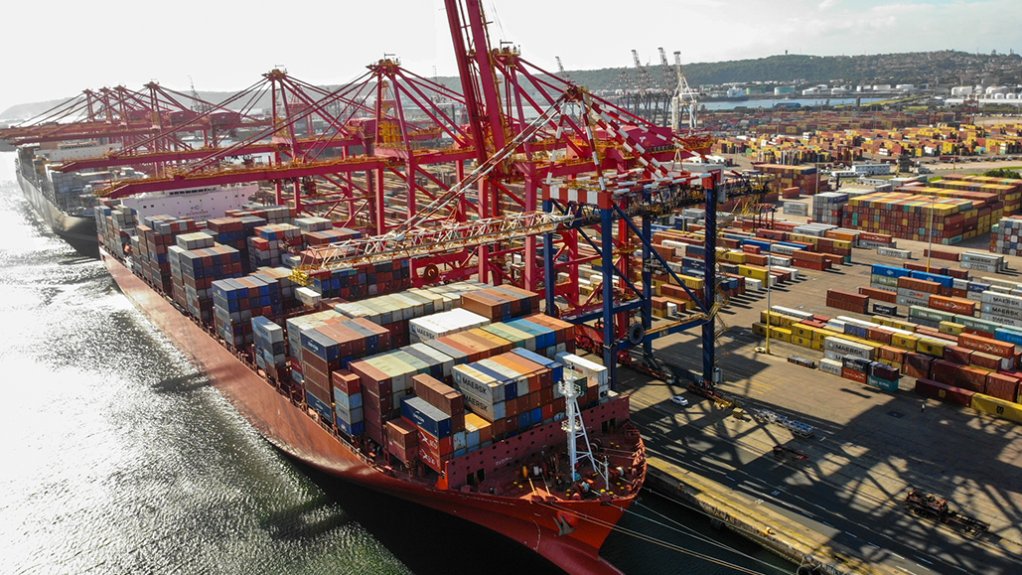
Recent reporting has put Durban Gateway Terminal (DGT) delays firmly in the spotlight. Reports describe vessel waiting times differently, so a headline figure should not be treated as a confirmed delay for your shipment. The practical starting point is the latest information for your specific vessel and cargo.
The question I would encourage every importer and exporter to ask is: What does the latest information mean for my vessel, my cargo and my business?
An arrival date is only the beginningA vessel’s estimated arrival, its berthing time, the completion of discharge and the point at which a container can be collected are different milestones. Confusing them can lead to premature transport bookings and delivery commitments that cannot be met.
DGT’s official vessel update issued at 11h00 on 6 October lists individual vessel statuses, while its terminal updates page provides separate berth plans, export stack dates and import storage information. This is why shipment-specific checks matter.
My advice is to establish which milestone has changed, what still needs confirmation and which decisions depend on it. A revised vessel date should trigger a review of the whole movement, including clearance readiness, collection arrangements and the receiving warehouse.
Keep the cost clock in viewThere is another development cargo owners should pay attention to. DGT’s notice dated 28 September sets out a phased return to storage arrangements from 1 October. For general-purpose cargo on vessels berthing from that date, it specifies five free storage days; other cargo categories have different arrangements.
Terminal storage and shipping-line demurrage are separate charges. Check the applicable terms and deadlines for your consignment rather than assuming relief from one charge covers the other.
The practical priority is to have documents, clearance requirements and transport planning ready, so avoidable delays do not compound the terminal disruption.
The debate over congestion chargesIn a report published on 5 October, Freight News described PFS Container Division’s challenge to congestion-related charges. The group said shipping-line demurrage and detention continued despite terminal-related delays, and cited a congestion destination fee of up to US$500.
The article also reported allegations concerning fee waivers linked to using shipping lines’ own transport services. PFS said a complaint had been lodged with the Competition Commission. These are allegations, rather than findings of wrongdoing. MSC has previously disputed the allegations, stating that demurrage is not charged to trucking companies or independent hauliers.
For cargo owners, this debate reinforces the need to understand each charge, who levies it and when it becomes payable. Ask for a clear breakdown of terminal storage, shipping-line demurrage, detention and any congestion surcharge, together with the applicable free-time periods and conditions.
If a charge is disputed, keep a record of the relevant vessel updates, release dates, booking attempts and correspondence. Those details can support a request for review, although a waiver cannot be assumed.
My view is that recovery must be judged across the whole movement. Better vessel performance needs to translate into cargo that can be released, collected and delivered with greater predictability. Cargo owners need visibility of both the schedule and the costs attached to it.
Clarity is part of the solutionDuring disruption, businesses need information they can act on: what is confirmed, what remains an estimate and what needs to happen next.
Purchasing, production, sales, transport and warehousing teams should be working from the same update. Where deadlines are at risk, early communication gives customers and colleagues time to adjust.
A logistics partner’s value is in connecting those details and helping you make informed decisions as conditions change.
Concerned about your specific vessel? Talk to us.Send WISTS your vessel name, voyage number, shipping line and expected arrival or departure date. If available, include your container or booking reference and any critical delivery deadline.
My team and I can help you review the latest available information and assess the next steps for your shipment.
Visit https://womeninshipping.co.za/request-a-quote to contact WISTS and explore our Industry Insights for more perspectives on the logistics developments affecting your business.
Your Cargo. Our Priority.
Editorial sources[1] SABC News, 2 October 2026: Durban container terminal working to resolve backlog: Creecy. https://www.sabcnews.com/sabcnews/durban-container-terminal-working-to-resolve-backlog-creecy/
[2] DGT official terminal updates; vessel update dated 6 October 2026, 11h00. https://dgt.ictsi.com/terminalupdates
[3] DGT notice dated 28 September 2026: Update to Standard Storage Periods – OOG, IMDG and General-Purpose Containers. https://cdnweb-dgt.ictsi.com/users/user26/2026.9.23%20DGT%20storage%20charge%20update.pdf
[4] Freight News, Lyse Comins, 5 October 2026: Transporters challenge congestion charges at Durban. https://www.freightnews.co.za/article/transporters-challenge-congestion-charges-at-durban
“My team and I can help you review the latest available information and assess the next steps for your shipment.”